17 Fit Calculators Recipe calorie calculator
Recipe calorie calculator the calories of your dish, per serving and per 100 g
Add what goes into the pot, from 2,500+ foods, in grams or in pieces and spoons. Weigh the finished dish if you can, say how many servings it makes, and you get the calories and macros of each serving.
Ingredients
Chicken with rice for four. An example to start from: change the amounts, add or remove ingredients, or start your own recipe.
- White rice, dry 720 kcal
- Chicken breast 440 kcal
- Onion 40 kcal
- Carrot 41 kcal
- Olive oil 177 kcal
Add an ingredient to see the dish’s calories.
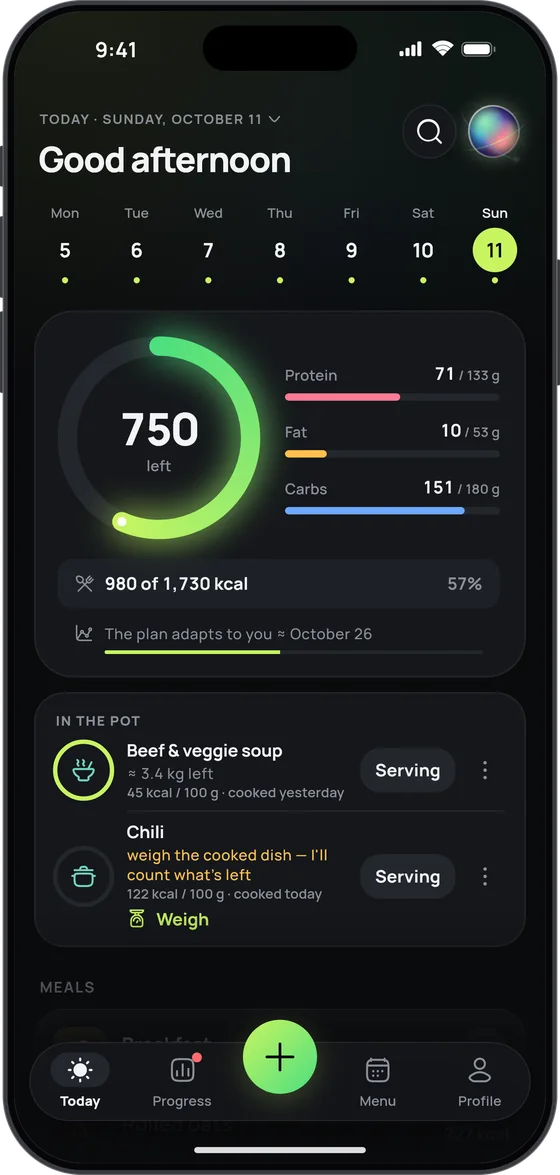
Cooking for a few days? In 17 Fit you add a recipe from a link, a cookbook photo or plain text, weigh the pot once, and each serving you take is counted for you, with what’s left.

One serving
354 kcal
A serving weighs about 275 g
- Protein · fat · carbs, per serving
- P 27 · F 6.6 · C 44.2 g
- The whole dish
- 1,418 kcal
- Per 100 g
- 129 kcal · P 9.8 · F 2.4 · C 16.1 g
Where the calories come from
- Protein 31%
- Fat 17%
- Carbs 51%
- Other 0%
Per 100 g of the cooked dish, which weighs 1,100 g.
Enter 1 to 5,000 g of each ingredient (or ¼ to 100 pieces or spoons), a cooked weight of 10 to 20,000 g and 1 to 50 servings.
The link keeps your recipe: anyone who opens it sees the same ingredients. Nothing is saved on our side.
354 kcal per serving, 1,418 kcal for the whole dish, 129 kcal per 100 g.
How it’s worked out
Simple arithmetic on the catalog’s numbers, the same 17 Fit uses for a pot in the app.
- Each ingredient Its calories, protein, fat and carbs per 100 g, from official food composition databases, times the grams you add. A piece or a spoon is the catalog’s usual weight for it.
- The whole dish The sum of the ingredients. Cooking changes the weight, as water boils off or rice soaks it up, but not the calories.
- Per 100 g The whole dish’s numbers divided by its cooked weight. Without one, by the ingredients’ total weight, which is right only for dishes that aren’t cooked.
- Per serving The whole dish divided by the number of servings. If your servings differ, weigh yours and use the figure per 100 g.
Weigh it right
- Raw or dry, as you weigh it Weigh rice, pasta, grains and meat before cooking and pick the raw or dry entry. Cooked rice weighs nearly three times as much as dry rice, so mixing the two up nearly triples the error.
- The oil counts A tablespoon of oil is about 115 kcal. Weigh what goes into the pan, not what the recipe suggests.
- The pot’s weight Weigh the empty pot once and write it down. Then weigh it full and subtract, and you have the cooked weight.
- Salt, spices, water They add next to no calories: leave them out, or add them if you want the list complete.
Questions and answers
How do I work out the calories of a homemade dish?
Weigh each ingredient raw, add up their calories, then divide by the number of servings. For an exact figure per 100 g, also weigh the finished dish and divide the total by its weight. This calculator does the arithmetic for you.
Should I weigh ingredients raw or cooked?
Raw, or dry for rice, pasta and grains: that is how recipes list them and how the food databases measure them. Pick the raw or dry entry, and enter the cooked weight of the whole dish separately.
Why does cooking change the calories per 100 g?
The calories stay the same, but the weight changes. A soup that simmers down gets denser, and rice that soaks up water gets lighter per 100 g. That’s why the cooked weight matters.
How accurate is it?
As accurate as your weighing. The values per 100 g come from official food composition databases (USDA, CIQUAL, CoFID and others). A brand’s product can differ from the average, and the oil and fat you add are the biggest source of error.
Can I save or share a recipe?
The page’s address keeps the recipe, so bookmark it or send the link. Nothing is stored on our servers, and your browser also remembers the last recipe you made.
How do I log a serving in my diary?
In 17 Fit, add the recipe from a link, a photo or a text, or weigh the pot, and each serving is logged with its calories and macros.
17 Fit
Your recipes, counted
17 Fit turns a recipe link, a cookbook photo or plain text into ingredients with grams, and keeps track of the pot for the days you eat from it.
- Recipes from a link, a photo or text
- Weigh the pot once, log servings in a tap
- Free food diary, no sign-up and no ads