17 Fit Food calories Vegetables and mushrooms
Mint calories and nutrition facts
Mint: 44 kcal per 100 g, protein 3.3 g, fat 0.73 g, carbs 1.6 g. Typical serving (5 g): 2 kcal.
Fresh mint goes into mojitos, tabbouleh, mint tea, Vietnamese spring rolls and the mint sauce British cooks serve with roast lamb. A 5 g sprig has about 2 kcal, so it adds flavor, not calories. Spearmint is the usual kitchen mint, while peppermint is stronger and mostly used for tea.
- High in protein
- High in fibre
- Low fat
- Very low salt
- Protein 30%
- Fat 15%
- Carbs 15%
- Other 41%
In everyday portions
- Typical serving · 5 g 2 kcal P 0.2 · F 0 · C 0.1 g
- 100 kcal is 225 g this much of it gives 100 kcal
- Energy density Very low 0.44 kcal per gram: the lower it is, the more food you get for the same calories
Nutrition per 100 g
The percentage is the share of an adult’s daily reference intake set by the EU (Regulation 1169/2011). What the % means
Energy and macros
- Energy 44 kcal 184 kJ 2%
- Protein 3.3 g 7%
- Fat 0.73 g 1%
- Carbs available, without fibre 1.6 g <1%
- Fibre 6.8 g
- Salt 0.07 g 1%
Where the calories come from
- Protein 30%
- Fat 15%
- Carbs 15%
- Other 41%
Protein and carbs give 4 kcal a gram, fat 9. “Other” is fibre, alcohol and organic acids.
Vitamins
- Vitamin A 203 µg 25%
- Vitamin D 0 µg 0%
- Vitamin E 0.4 mg 3%
- Vitamin K no data
- Vitamin C 13.3 mg 17%
- Vitamin B1 thiamin 0.078 mg 7%
- Vitamin B2 riboflavin 0.175 mg 12%
- Vitamin B3 niacin 0.948 mg 6%
- Vitamin B5 pantothenic acid 0.25 mg 4%
- Vitamin B6 0.158 mg 11%
- Folate B9 105 µg 52%
- Vitamin B12 0 µg 0%
- Choline no data
Minerals
- Potassium 458 mg 23%
- Calcium 199 mg 25%
- Phosphorus 60 mg 9%
- Magnesium 63 mg 17%
- Iron 11.9 mg 85%
- Zinc 1.1 mg 11%
- Copper 0.24 mg 24%
- Manganese 1.1 mg 56%
- Selenium 10.8 µg 20%
- Iodine 6 µg 4%
- Sodium 30 mg 1%
EU criteria for nutrition claims
Which of them 100 g of this food meets under Regulation (EC) 1924/2006.
- High in protein
- High in fibre
- Low fat
- Very low salt
- High in iron
- High in manganese
- High in folate
- Source of vitamin A
- Source of calcium
- Source of copper
- Source of potassium
- Source of selenium
- Source of magnesium
- Source of vitamin C
Vegetables and mushrooms
Among vegetables and mushrooms
The category in the 17 Fit catalog: 263 foods. Compared per 100 g.
- 65% More calories than 65% of vegetables and mushrooms.
- 83% More protein than 83% of vegetables and mushrooms.
- 95% More fibre than 95% of vegetables and mushrooms.
- 98% More iron than 98% of vegetables and mushrooms.
- 93% More manganese than 93% of vegetables and mushrooms.
Similar in composition
The foods with the nearest calories and macros.
- Honey fungus 37 kcal
- Chives 30 kcal
- Collard greens 32 kcal
- Parsley 36 kcal
- Morels 31 kcal
- Dill 43 kcal
More in Vegetables and mushrooms
- Green beans 31 kcal
- Peas 81 kcal
- Brussels sprouts 43 kcal
- Asparagus 20 kcal
- Sweet corn 86 kcal
- Beets (beetroot) 43 kcal
17 Fit
Count calories without scales or tables
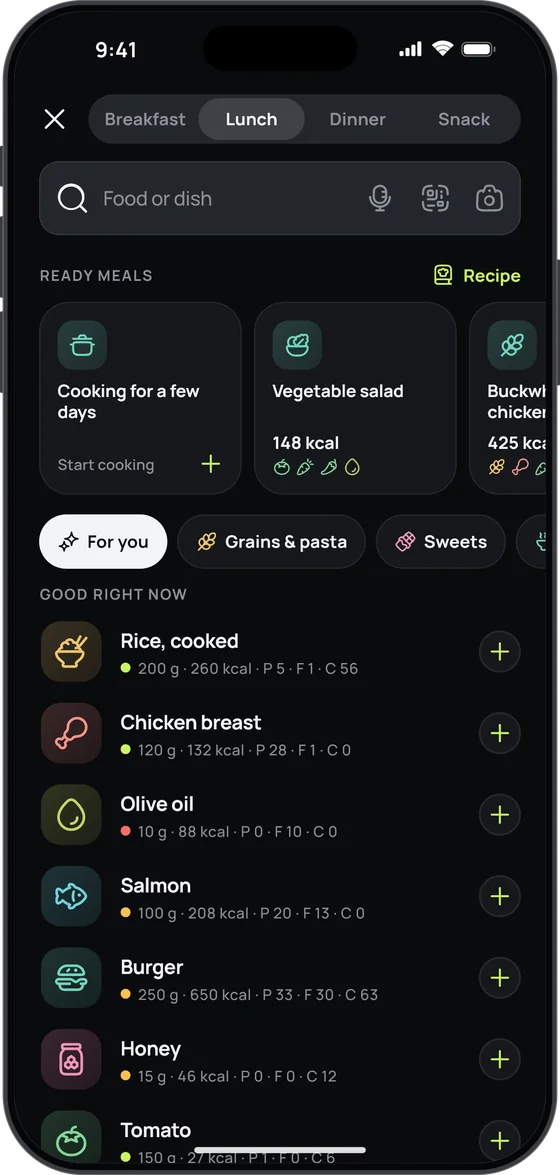
Snap your plate or just say what you ate — 17 Fit recognises the dishes, estimates the grams and counts the calories, macros, vitamins and minerals.
- Photo, voice or a search among 2,592 foods and dishes
- A plan that adjusts to your weight every week
- Free food diary, no sign-up and no ads


Where these numbers come from
USDA FoodData Central (SR Legacy, USA), code 173475.
The vitamins and minerals it lacked come from Livsmedelsdatabasen (Sweden).
Carbs are available carbohydrates, without fibre, as on EU labels.