Frittata calories and nutrition facts
Frittata: 160 kcal per 100 g, protein 9.4 g, fat 12.3 g, carbs 2.5 g. Typical serving (200 g): 320 kcal.
Italians make a frittata by cooking beaten eggs with cheese and vegetables, meat or leftover pasta until set on the stove, often finishing it in the oven, then cutting it into wedges. A 200 g wedge is about 320 kcal, with the cheese and the oil in the pan making the biggest difference. Unlike an omelet, it’s never folded, and it’s just as good cold the next day.
- High in protein
- High in selenium
- Source of vitamin B12
- Source of vitamin D
- Protein 24%
- Fat 70%
- Carbs 6%
In everyday portions
- Typical serving · 200 g 320 kcal P 18.8 · F 24.5 · C 4.9 g
- 100 kcal is 60 g this much of it gives 100 kcal
- 20 g of protein is 215 g this much to eat for 20 g of protein
- Energy density Medium 1.6 kcal per gram: the lower it is, the more food you get for the same calories
Nutrition per 100 g
The percentage is the share of an adult’s daily reference intake set by the EU (Regulation 1169/2011). What the % means
Energy and macros
- Energy 160 kcal 670 kJ 8%
- Protein 9.4 g 19%
- Fat 12.3 g 18%
- Carbs available, without fibre 2.5 g <1%
- Fibre 0.32 g
- Salt 0.45 g 7%
Where the calories come from
- Protein 24%
- Fat 70%
- Carbs 6%
Protein and carbs give 4 kcal a gram, fat 9. “Other” is fibre, alcohol and organic acids.
Vitamins
- Vitamin A 112 µg 14%
- Vitamin D 1.2 µg 25%
- Vitamin E 1.4 mg 12%
- Vitamin K 4 µg 5%
- Vitamin C 3.4 mg 4%
- Vitamin B1 thiamin 0.039 mg 4%
- Vitamin B2 riboflavin 0.318 mg 23%
- Vitamin B3 niacin 0.133 mg <1%
- Vitamin B5 pantothenic acid 1 mg 17%
- Vitamin B6 0.144 mg 10%
- Folate B9 34.3 µg 17%
- Vitamin B12 0.63 µg 25%
- Choline 180 mg
Minerals
- Potassium 153 mg 8%
- Calcium 87 mg 11%
- Phosphorus 163 mg 23%
- Magnesium 13.2 mg 4%
- Iron 1.2 mg 8%
- Zinc 1.1 mg 11%
- Copper 0.057 mg 6%
- Manganese 0.06 mg 3%
- Selenium 20.3 µg 37%
- Iodine no data
- Sodium 179 mg 7%
EU criteria for nutrition claims
Which of them 100 g of this food meets under Regulation (EC) 1924/2006.
- High in protein
- High in selenium
- Source of vitamin B12
- Source of vitamin D
- Source of phosphorus
- Source of vitamin B2
- Source of folate
- Source of vitamin B5
Dishes
Among dishes
The category in the 17 Fit catalog: 699 foods. Compared per 100 g.
- 88% More selenium than 88% of dishes.
- 79% More vitamin B12 than 79% of dishes.
- 96% More vitamin D than 96% of dishes.
- 83% More phosphorus than 83% of dishes.
- 97% More vitamin B2 than 97% of dishes.
Similar in composition
The foods with the nearest calories and macros.
- Omelette 154 kcal
- Beef and broccoli 160 kcal
- Caesar salad 150 kcal
- Beef stroganoff 150 kcal
- Egg muffins 136 kcal
- Chicken tikka masala 156 kcal
More in Dishes
- Bean soup 67 kcal
- Lasagne 139 kcal
- Chicken Kiev 280 kcal
- Full English breakfast 160 kcal
- Beans on toast 168 kcal
- Shepherd’s pie 123 kcal
17 Fit
Count calories without scales or tables
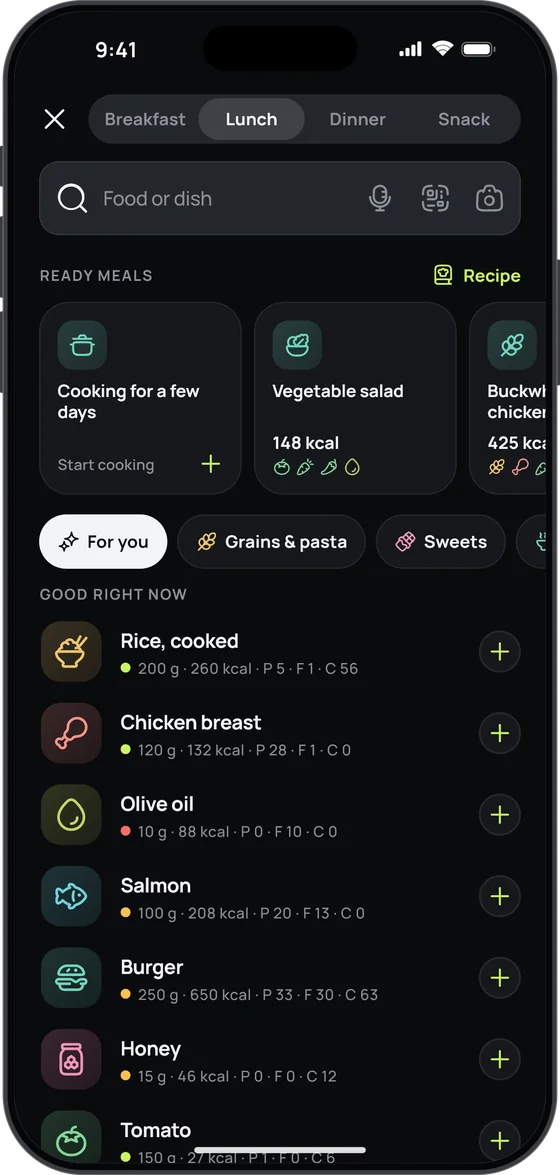
Snap your plate or just say what you ate — 17 Fit recognises the dishes, estimates the grams and counts the calories, macros, vitamins and minerals.
- Photo, voice or a search among 2,592 foods and dishes
- A plan that adjusts to your weight every week
- Free food diary, no sign-up and no ads


Where these numbers come from
Worked out from a recipe of 6 ingredients, with data from USDA FoodData Central (SR Legacy, USA).
Carbs are available carbohydrates, without fibre, as on EU labels.