17 Fit Food calories Dairy and eggs
Labneh calories and nutrition facts
Labneh: 158 kcal per 100 g, protein 8.1 g, fat 12.5 g, carbs 3.6 g. 1 tbsp (30 g): 47 kcal.
Strained until it’s thick enough to spread, labneh is the yogurt eaten across the Levant for breakfast with olive oil, za’atar and warm flatbread. This version with olive oil has about 158 kcal per 100 g and is high in protein, and a 30 g spoonful comes to around 47 kcal. Pita and any extra oil drizzled over are logged on their own.
- High in protein
- Very low salt
- Source of vitamin B12
- Source of vitamin B2
- Protein 20%
- Fat 71%
- Carbs 9%
In everyday portions
- 1 tbsp ≈ 30 g 47 kcal P 2.4 · F 3.8 · C 1.1 g
- Typical serving · 60 g 95 kcal P 4.9 · F 7.5 · C 2.1 g
- 100 kcal is 65 g this much of it gives 100 kcal
- 20 g of protein is 245 g this much to eat for 20 g of protein
- Energy density Medium 1.6 kcal per gram: the lower it is, the more food you get for the same calories
Nutrition per 100 g
The percentage is the share of an adult’s daily reference intake set by the EU (Regulation 1169/2011). What the % means
Energy and macros
- Energy 158 kcal 661 kJ 8%
- Protein 8.1 g 16%
- Fat 12.5 g 18%
- Carbs available, without fibre 3.6 g 1%
- Fibre 0 g
- Salt 0.08 g 1%
Where the calories come from
- Protein 20%
- Fat 71%
- Carbs 9%
Protein and carbs give 4 kcal a gram, fat 9. “Other” is fibre, alcohol and organic acids.
Vitamins
- Vitamin A 1.8 µg <1%
- Vitamin D 0 µg 0%
- Vitamin E 1.2 mg 10%
- Vitamin K 4.8 µg 6%
- Vitamin C 0 mg 0%
- Vitamin B1 thiamin 0.021 mg 2%
- Vitamin B2 riboflavin 0.25 mg 18%
- Vitamin B3 niacin 0.187 mg 1%
- Vitamin B5 pantothenic acid 0.298 mg 5%
- Vitamin B6 0.057 mg 4%
- Folate B9 4.5 µg 2%
- Vitamin B12 0.675 µg 27%
- Choline 13.6 mg
Minerals
- Potassium 127 mg 6%
- Calcium 90.1 mg 11%
- Phosphorus 122 mg 17%
- Magnesium 9.9 mg 3%
- Iron 0.045 mg <1%
- Zinc 0.468 mg 5%
- Copper 0.015 mg 2%
- Manganese 0.008 mg <1%
- Selenium 8.7 µg 16%
- Iodine no data
- Sodium 31.7 mg 1%
EU criteria for nutrition claims
Which of them 100 g of this food meets under Regulation (EC) 1924/2006.
- High in protein
- Very low salt
- Source of vitamin B12
- Source of vitamin B2
- Source of phosphorus
- Source of selenium
Dairy and eggs
Among dairy foods and eggs
The category in the 17 Fit catalog: 170 foods. Compared per 100 g.
- 62% Fewer calories than 62% of dairy foods and eggs.
Similar in composition
The foods with the nearest calories and macros.
- Ricotta 150 kcal
- Scrambled eggs 145 kcal
- Quail eggs 158 kcal
- Sour cream 162 kcal
- Cream 131 kcal
- Duck eggs 185 kcal
More in Dairy and eggs
- Whipped cream 257 kcal
- Skyr 49 kcal
- Egg yolk 322 kcal
- Monterey Jack 373 kcal
- Pecorino 387 kcal
- Eggs 143 kcal
17 Fit
Count calories without scales or tables
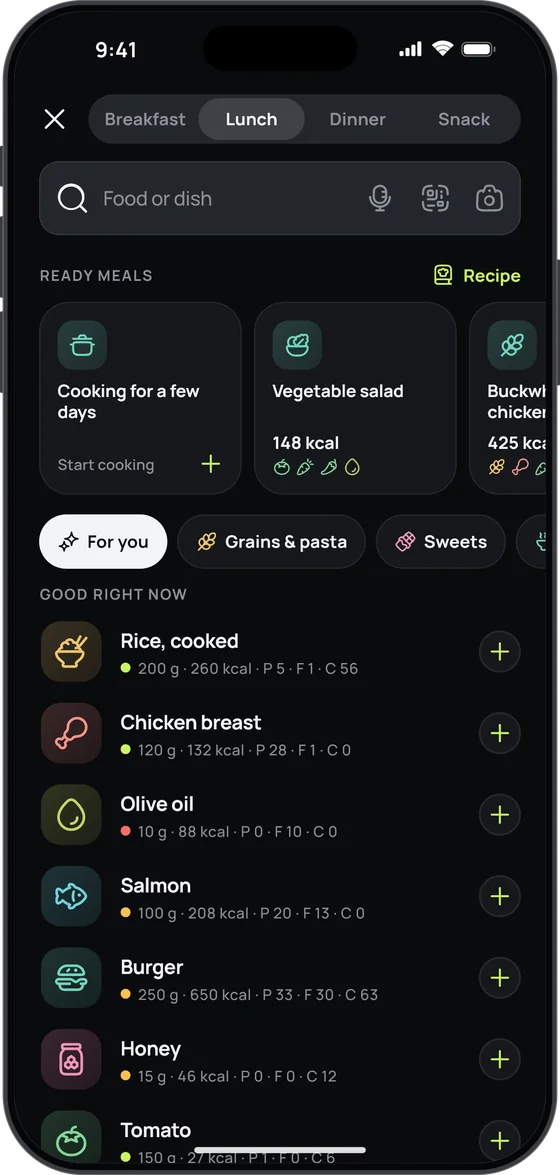
Snap your plate or just say what you ate — 17 Fit recognises the dishes, estimates the grams and counts the calories, macros, vitamins and minerals.
- Photo, voice or a search among 2,592 foods and dishes
- A plan that adjusts to your weight every week
- Free food diary, no sign-up and no ads


Where these numbers come from
Worked out from a recipe of 3 ingredients, with data from USDA FoodData Central (SR Legacy, USA).
Carbs are available carbohydrates, without fibre, as on EU labels.