17 Fit Food calories Sweets and desserts
Dulce de leche calories and nutrition facts
Dulce de leche: 307 kcal per 100 g, protein 6.5 g, fat 5.5 g, carbs 58 g. 1 tbsp (20 g): 61 kcal.
Dulce de leche is milk and sugar cooked down slowly into a thick, caramel-colored spread, beloved in Argentina and Uruguay in alfajores, on pancakes and in ice cream; in Britain, boiled condensed milk does the same job in banoffee pie. It has about 307 kcal per 100 g, and a 20 g tablespoon brings around 61 kcal. Spooned straight from the jar, the portion is easy to underestimate.
- Low salt
- Source of vitamin B2
- Source of phosphorus
- Source of calcium
- Protein 8%
- Fat 16%
- Carbs 76%
In everyday portions
- 1 tbsp ≈ 20 g 61 kcal P 1.3 · F 1.1 · C 11.6 g
- Typical serving · 30 g 92 kcal P 1.9 · F 1.6 · C 17.4 g
- 100 kcal is 33 g this much of it gives 100 kcal
- 20 g of protein is 310 g this much to eat for 20 g of protein
- Energy density Medium 3.1 kcal per gram: the lower it is, the more food you get for the same calories
Nutrition per 100 g
The percentage is the share of an adult’s daily reference intake set by the EU (Regulation 1169/2011). What the % means
Energy and macros
- Energy 307 kcal 1,284 kJ 15%
- Protein 6.5 g 13%
- Fat 5.5 g 8%
- Carbs available, without fibre 58 g 22%
- Fibre 0.58 g
- Salt 0.27 g 5%
Where the calories come from
- Protein 8%
- Fat 16%
- Carbs 76%
Protein and carbs give 4 kcal a gram, fat 9. “Other” is fibre, alcohol and organic acids.
Vitamins
- Vitamin A no data
- Vitamin D 0.2 µg 4%
- Vitamin E 0.2 mg 2%
- Vitamin K no data
- Vitamin C 2.6 mg 3%
- Vitamin B1 thiamin 0.016 mg 1%
- Vitamin B2 riboflavin 0.41 mg 29%
- Vitamin B3 niacin 0.21 mg 1%
- Vitamin B5 pantothenic acid 0.84 mg 14%
- Vitamin B6 0.016 mg 1%
- Folate B9 11 µg 6%
- Vitamin B12 0.31 µg 12%
- Choline no data
Minerals
- Potassium 350 mg 18%
- Calcium 211 mg 26%
- Phosphorus 193 mg 28%
- Magnesium 22 mg 6%
- Iron 0.17 mg 1%
- Zinc 0.79 mg 8%
- Copper 0.004 mg <1%
- Manganese 0.002 mg <1%
- Selenium no data
- Iodine no data
- Sodium 109 mg 5%
EU criteria for nutrition claims
Which of them 100 g of this food meets under Regulation (EC) 1924/2006.
- Low salt
- Source of vitamin B2
- Source of phosphorus
- Source of calcium
- Source of potassium
Sweets and desserts
Among sweets and desserts
The category in the 17 Fit catalog: 269 foods. Compared per 100 g.
- 64% Fewer calories than 64% of sweets and desserts.
- 73% More protein than 73% of sweets and desserts.
- 95% More vitamin B2 than 95% of sweets and desserts.
- 87% More phosphorus than 87% of sweets and desserts.
- 94% More calcium than 94% of sweets and desserts.
Similar in composition
The foods with the nearest calories and macros.
- Condensed milk 321 kcal
- Christmas pudding 285 kcal
- Panettone 354 kcal
- Mooncakes 348 kcal
- Lemon curd 266 kcal
- Lebkuchen 326 kcal
More in Sweets and desserts
- Banana bread 331 kcal
- Carrot cake 374 kcal
- Maple syrup 260 kcal
- Tortilla chips 497 kcal
- White chocolate 539 kcal
- Macarons 430 kcal
17 Fit
Count calories without scales or tables
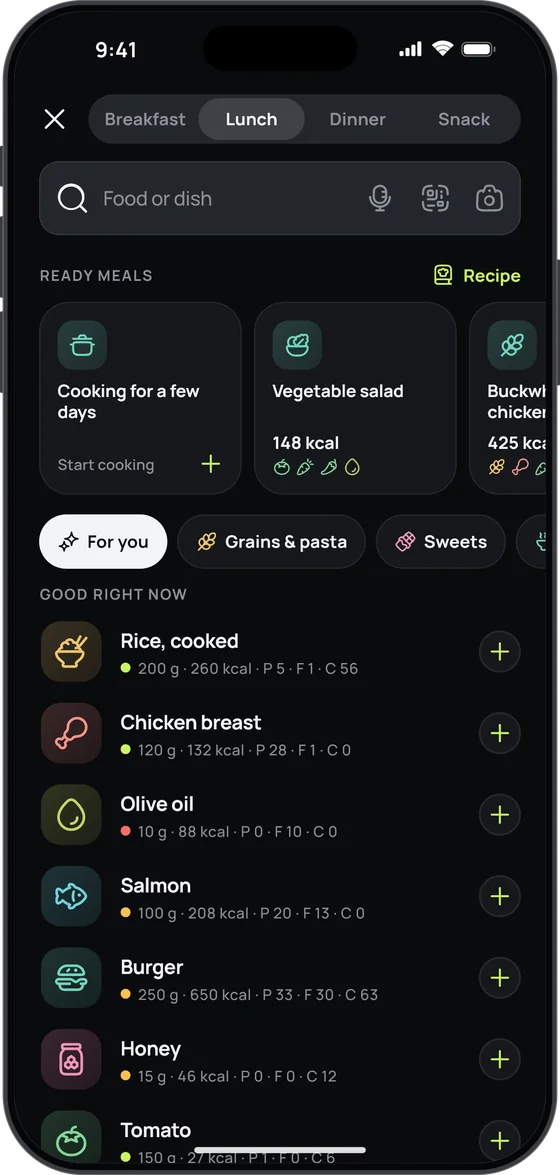
Snap your plate or just say what you ate — 17 Fit recognises the dishes, estimates the grams and counts the calories, macros, vitamins and minerals.
- Photo, voice or a search among 2,592 foods and dishes
- A plan that adjusts to your weight every week
- Free food diary, no sign-up and no ads


Where these numbers come from
ANSES-CIQUAL (France), code 31040.
Carbs are available carbohydrates, without fibre, as on EU labels.